Iconic wines and vine varieties can be easily mistaken in Italy
Often, during Gourmetaly’s foodie events, customers ask us questions that arouse our curiosity. More often than we think, information that is obvious to us turns out to be absolutely exotic.
In particular, if we are talking to someone from abroad. Let’s see the Italian iconic wines togheter!
Italian iconic wines and vines
As is well known, Italy, the land of wine (Oenotria) for ancient Greeks, is a gold mine of varieties. Few countries in the world can compete with Italy for the number of native varieties, indeed. One of the aspects of Italian wine that most strikes foreigners, therefore, is precisely the variety. Variety, understood as the number of vines, but also of wines that are obtained from the vines. In this article, we will only mention a handful of vines, in terms that are not very exhaustive. And it is already clear how vast and complex the subject can be.
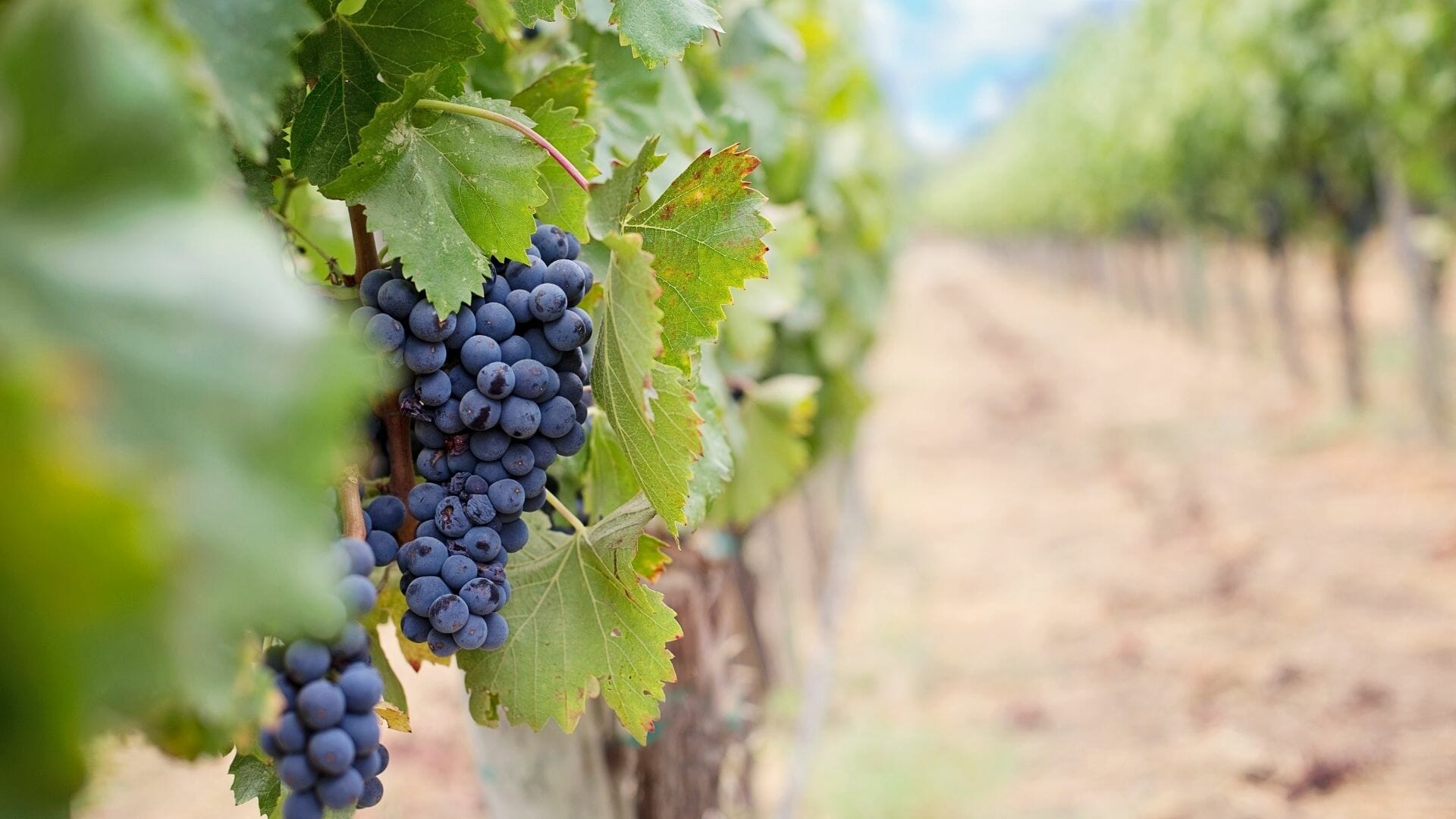
A clear example: the Nebbiolo grape variety.
Nebbiolo grape is typical of Piedmont and largely unknown to most, except in its transformation into Barolo wine. Barolo is, without a doubt, the most famous and appreciated version of Nebbiolo wordlwide. Surprisingly, not everyone knows that the basic grape to produce it is precisely that Nebbiolo which in Piedmont also goes by other names. Moreover: talking about Barolo is not easy too since there are so many and all different kinds. Barolo wine vary on the production style but also and above all, on the vineyard in which they sink their roots. Therefore, as mentioned above, we have the possibility of tasting a Barolo from the Langhe or Roero, from Castiglione Falletto (CN) or from Serralunga d’Alba. So, better call it Barolos: we could drink this wine forever without ever getting tired of it.
Piedimont: in the Langhe and Roero
The Nebbiolo vines that will give Barolo, grow on hilly terrain at 204- 100 m above sea level . Soils of Miocene origin of the two periods: Helvetian (Castiglione Falletto, Serralunga and Monforte) and Tortonian (Barolo, Novello, La Morra, Verduno). The Barolos produced from grapes grown on Helvetian terrains are generally more austere and full-bodied. Instead, those coming from vines of the younger Tortonian terrains are considered softer and more velvety. But within these considerations, obviously, each particular vintage plays a role. As well as the parcel of vineyards from which the grapes come from. Not to mention, the evolution in the refinement according to the winemaker’s style.
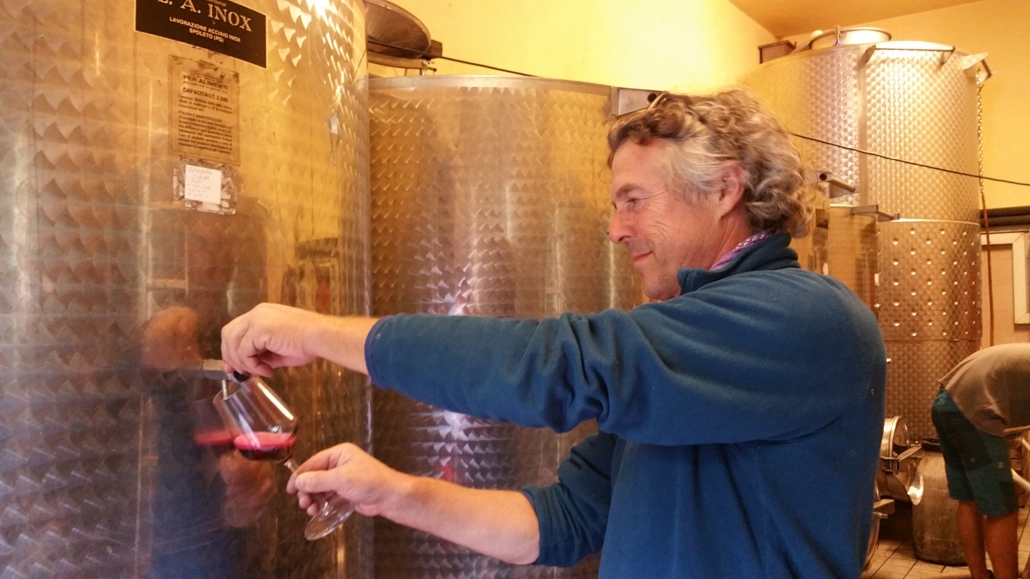
So are we talking about the same grape variety?
Of course, it is always Nebbiolo grape, even if grown in different conditions on different soils. Wine, we know, follows the style and philosophy of the producer, expressing itself in a completely different way, depending on a variety of factors. We must also consider the refinement time. For Barolo wine the rule requires a minimum of 38 months of which at least 8 in wood, with release for sale after four years. For Barolo Riserva, however, the minimum refinement is 62 months with release starting from the sixth year after the harvest. Following the legislative change of the DOCG in 2010, on the label we can also find one of the 72 additional geographical mentions. These refer to the cru from which the grapes come. Therefore, orienting oneself among Italian wines is never an easy task; especially if you do not know the geography and local production styles.
Nebbiolo: much more behind
In the northern-east Piedimont, between the cities of Biella and Vercelli, the Nebbiolo’s name is Chiavennasca. You can find many wines with different names, with 100% Chiavenasca or with other local grape varieties. An iconic wine, not so popular outside Italy, is the Gattinara. Gattinara wine is produced with a minimum of 90% Nebbiolo and a small addition of vespolina and uva rara. The latter are white grape varieties typical of the area. The wine is long-lived and holds up well to maturation in wood in large Italian barrels. It gives intense and complex garnet-colored wines on the nose with tones of roses and violets, wild berries, spices, leather and mineral notes and notes. Nebbiolo grape gives us the Barbaresco wine as well, a great expression of the variety especially for the following: Rabajà, Asili, Martinenga, Sorì Tildin, Sorì San Lorenzo, Costa Russi, Pajorè e Roncagliette.

The Nebbiolo of the North
Other northern Nebbiolos are represented by the wines of Boca, Ghemme, Sizzano Fara, Bramaterra and Lessona. Ghemme is produced with 85% Nebbiolo and other percentages of rare grapes and vespolina. It is a less well-known wine than Gattinara, however, in the past it achieved great success. Even the great ‘800 Italian statesman Camillo Benso Count of Cavour considered it worthy. Comparing it even to Chateau Lafite, one of the best wines of France. For Ghemme the refinement reaches a minimum of 18 months. For Ghemme riserva you have to wait 24. Even further north, (and slightly further east, in Lombardy) Nebbiolo changes its name: Chiavennasca. At the top there are two DOCGs, one for Valtellina Superiore and the other for Sfursat or Sforzato, obtained by partially drying the grapes.
Sangiovese: another grape variety for decidedly iconic wines
Nebbiolo is not the only example to indicate famous wines that are obtained from little-known varieties. In Tuscany, a region where it plays the lion’s share, is the Sangiovese to rule the game. As a main example: Chianti is based on Sangiovese. Recent research has shown that Tuscan Sangiovese is found in different clonal varieties. The territory suited to this red grape is, without a doubt, the countryside near Siena. Castellina in Chianti, Castelnuovo Berardenga, Gaiole in Chianti, Montalcino, Montepulciano and San Gimignano. These are all municipalities with over 1000 hectares dedicated to the culture of Sangiovese.

Under the Tuscan sun: Chianti hills
When discussing icons, one cannot overlook Chianti wines. For many decades, the iconic flask, wrapped in straw, has become a symbol of this renowned beverage. The once-controversial emblem of low-quality Italian wine is now fading into memory. Meanwhile, other significant symbols, like the black rooster and the DOC & DOCG, are gaining prominence. The Chianti region consists of two distinct zones: Chianti Classico and a much larger surrounding area. The Classico is a more restricted historical area between Florence and Siena. The generic Chianti refers to a vast area extends to many provinces with the exception of Massa Carrara, Grosseto and Livorno. It includes 7 sub-areas that can appear on the label: Colli fiorentini, Colli senesi, Colli aretini, Colline pisane, Montalbano, Montespertoli and Rufina. The grape is, usually, Sangiovese in purity. Even if, in the original recipe of Baron Bettino Ricasoli (1835), a 10% of white grapes, can be included.
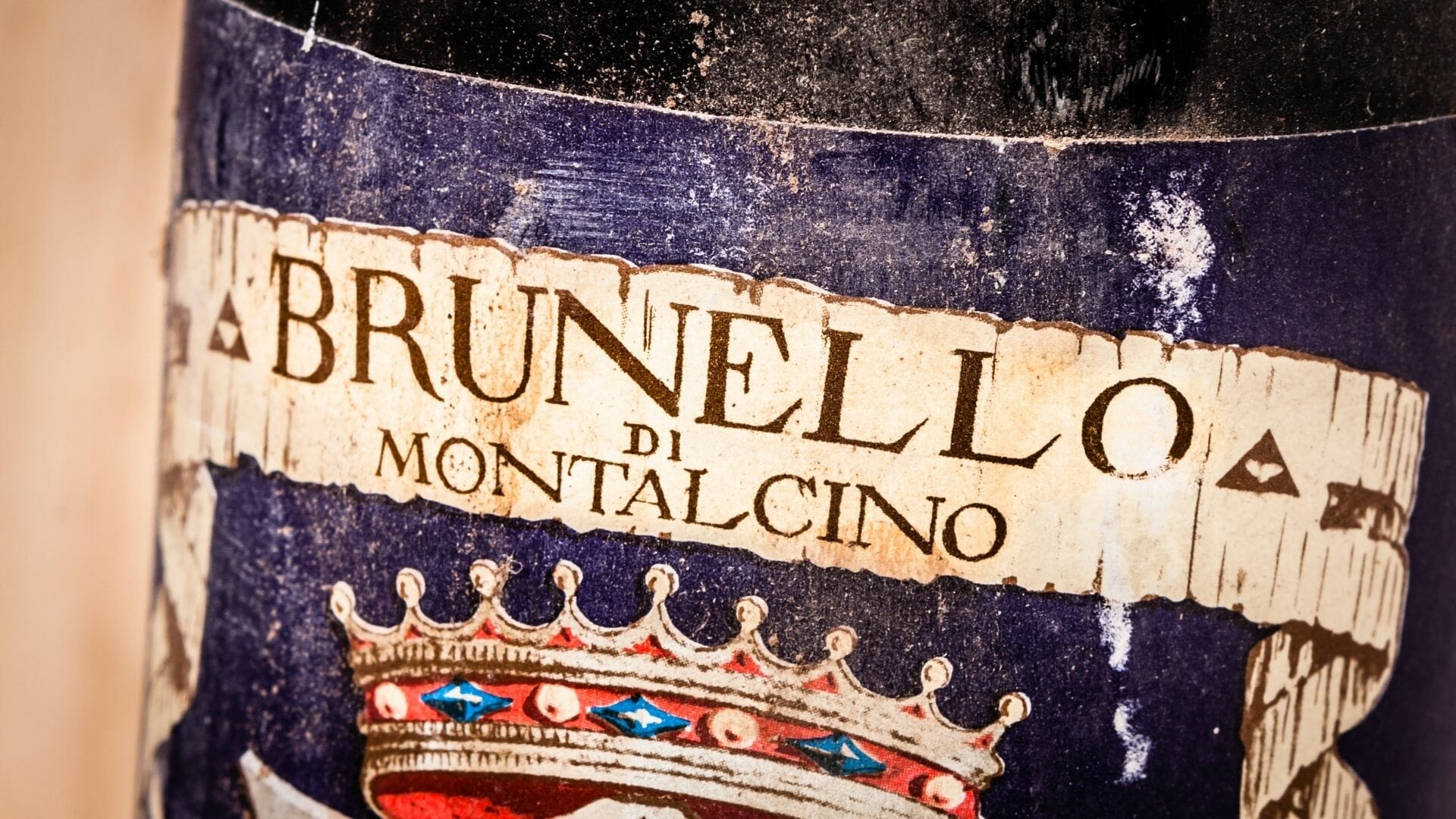
1980: A star is born
Always based on Sangiovese, in Siena the iconic Brunello di Montalcino DOCG is produced, one of the most elegant and long-lived Italian wines. DOC since 1980, it is obtained from 100% Sangiovese, matures for at least two years in oak and cannot be sold before 5 years from the harvest. The same grapes, however, are used to produce the Rosso DOC, ready the following year. Sangiovese is the protagonist for the production of another absolutely iconic wine: the Carmignano. Production area are Carmignano and Poggio a Caiano in the province of Prato.
…and always Sangiovese
is the grape variety used to produce Montepulciano DOCG, produced in the Municipality of Montepulciano (in the province of Siena). Here, the ancient clonal selection of the Sangiovese grape variety, locally known as prugnolo gentile, grows. Information can often be perplexing for those exploring Tuscan wine, especially due to the confusion caused by homonymy. This occurs when people mix up the Montepulciano wine made from Sangiovese in Tuscany with Montepulciano d’Abruzzo wine. The two wines (and grape varieties) have nothing to do with each other. The first comes from Sangiovese vine and the second from a variety called Montepulciano d’Abruzzo.

The Most Expensive & Iconic Tuscan Wine: Bolgheri Sassicaia
Another iconic wine is, undoubtedly, the Bolgheri. We have already spoken about this superstar. This wine is crafted from a mix of native and international grape varieties in different proportions, capturing the essence of Bordeaux styles. The Sassicaia is one of the most renowned Italian wines: so iconic that it has given its name to a DOCG. A note to the other masterpieces Solaia & Tignanello.
Ladies & Gents: the legendary Amarone from Veneto region
Amarone della Valpolicella is absolutely iconic. A much-loved wine for its power and organoleptic profile. The grapes come from the hills around Verona, between the Adige and the Val di Illasi. The hilly areal, which extends towards the east and north, offers very particular soils. Amarone wine is a blend of three main grape varieties: Corvina, Corvinone and Rondinella, as well as other complementary grape varieties. A peculiar winemaking process uses grapes that are first partially dried. The grapes then ferment until all the sugar is converted into alcohol for a full-bodied wine. With a high alcohol content, but with tannins that are never invasive, capable of epic aging.
Prosecco wine: Beyond an Icon, It’s a Genuine Passion
So far, we have discussed red grapes with red berries, but white grapes are also quite iconic. Often, the wines from these grapes are more famous than the grape themselves. A prime example being the well-known Prosecco. Not everyone is aware that the name originates from a village located in the Municipality of Prosecco, situated in northeastern Italy.The Prosecco DOCG wine is produced with a grape variety called Glera. Within the territory there are particular sub-zones such as Conegliano Valdobbiadene and Cartizze.
It’s easy to say Prosecco…
The DOCG Conegliano Valdobbiadene Superiore and Colli Asolani Superiore distinguish the areas with the greatest expressive vocation. On the bottle we could also find the denomination le rive. Le Rive is a geographical specification capable of highlighting the particularity of different vineyards in the territory. We are not talking about Cru, but about sub-zones. The real Cru is instead the Cartizze, an area of just over 100 hectares. This land extends between the steep hills of San Pietro di Barbozza, Santo Stefano and Saccol, in the Municipality of Valdobbiadene. Cartizze has particular soils and a unique microclimate capable of sublimating the characteristics of Glera.

More Famous Abroad than in its Homeland
Still on the subject of white grapes: the Pinot Grigio grape variety. Pinot Grigio, internationally considered, an iconic Italian grape variety and wine. However, in Italy, few people will be agree. Despite being a very interesting grape variety, Pinot Grigio has achieved more success abroad than at home. It is an international grape variety that expresses itself best in Trentino Alto Adige and Lombardy.
Still on the subject of bubbles
Iconic sparkling wines, particularly in Italy, come from the regions of Franciacorta and Oltrepò Pavese. These renowned Italian sparkling wines, known as bollicine, primarily feature local white grape varieties. Occasionally, red grapes give a white wine, like often for Pinot Noir.
So which are the true iconic Italian wines?
Basically, every region of Italy has its own iconic wine. Wines, made from native vines, embody the bond between nature and human craftsmanship, reflecting values that are vital to preserve and enrich. For this reason, a better appreciation of wine also passes through the curiosity that can arise from understanding the history and tradition. The geography and the territory that host the work of man. That peasant wisdom that today, thanks to the contribution of technology, can truly rediscover and enhance local vines. An ampelographic heritage that otherwise would easily be lost.